Allowance apps often come with a debit card and a child's phone. That fits a teenager. A 5 or 7 year old needs something simpler: a way to see effort turn into a reward, and a reason to wait.
Points first, money later
You do not have to start with real money. Many parents begin with points or coins. A child earns coins for chores. Then they trade coins for things you choose: a treat, a movie night, extra screen time, or a small amount of pocket money.
This keeps the lesson clear. Work earns a reward. A bigger reward takes more coins.
Pay on one day each week
A fixed payday helps young children. They learn that money arrives on a schedule and does not appear on demand. Pick a day, such as Friday, and keep it. Count the stars together and hand out the coins.
Make payday a small event. Sit down with your child, count the week out loud and say what went well. Young children remember a ritual far better than a rule. It also gives you a calm moment to talk about what they want to buy and what they want to save.
How much to pay
A common rule of thumb is about one unit of money per year of age, per week. A 5 year old gets 5 coins. A 9 year old gets 9. Treat it as a starting point and change it for your family.
Keep chores and allowance honest
Some families split the two. Basic help at home is part of family life and earns nothing. Extra jobs earn coins. Pick the rule that fits your values, say it out loud, and stay consistent.
What to look for in an app
- It works for kids who cannot read yet.
- A parent approves each chore.
- It does not need a bank card, a bank account or a child's phone.
- It has a clear price, with no ads.
- It lets a child see savings grow.
Add a saving habit
Give your child a rule: coins that stay in the piggy bank earn a bonus. It teaches patience better than a lecture. Read how to teach kids about interest for easy ways to do it.
Common mistakes
- Paying too much too soon. Small amounts teach just as well.
- Changing the rules in the middle of a week.
- Taking back coins for bad behaviour. Keep chores and discipline apart.
- Skipping payday. A late payday teaches the wrong lesson.
How ChorePig helps
ChorePig runs payday for you. Kids earn stars all week. On payday, which is Friday unless you change it, every approved star becomes a coin in the kid's own pig. The pig adds a weekly saving bonus on the coins they kept.
You fill the Shop with rewards and set the prices in coins. Coins are points, not real money, so a reward can be anything you like. ChorePig is free during the beta, and it needs no bank card.
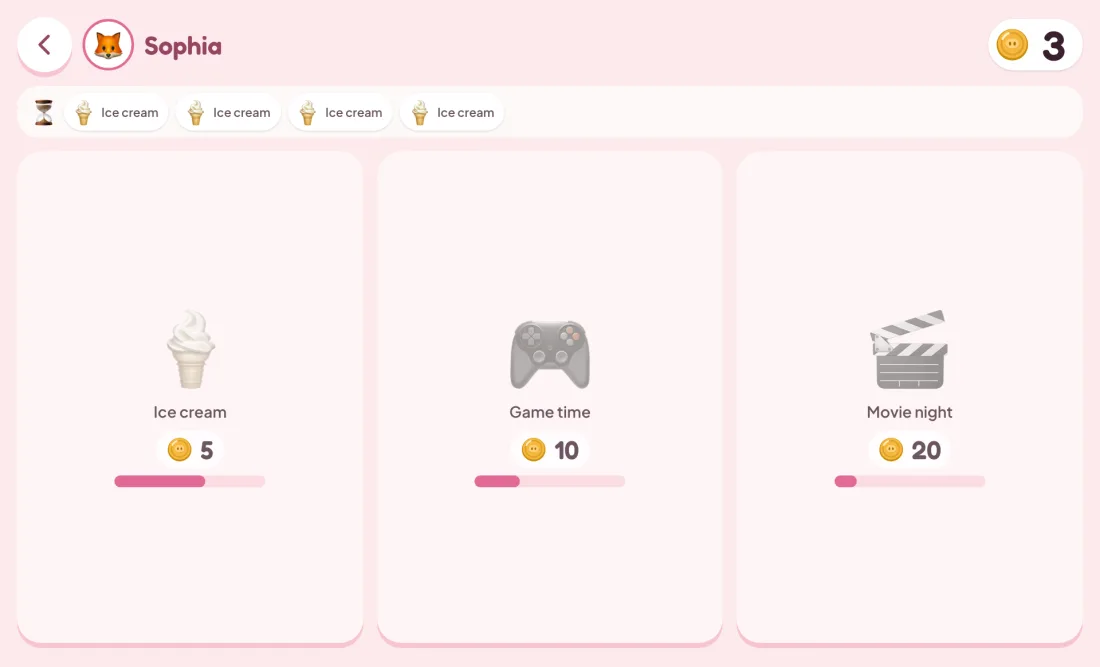
See Payday and saving for how it works, or Start free.